

Understanding Plantar Fasciitis: Causes, Recovery and Structural Support
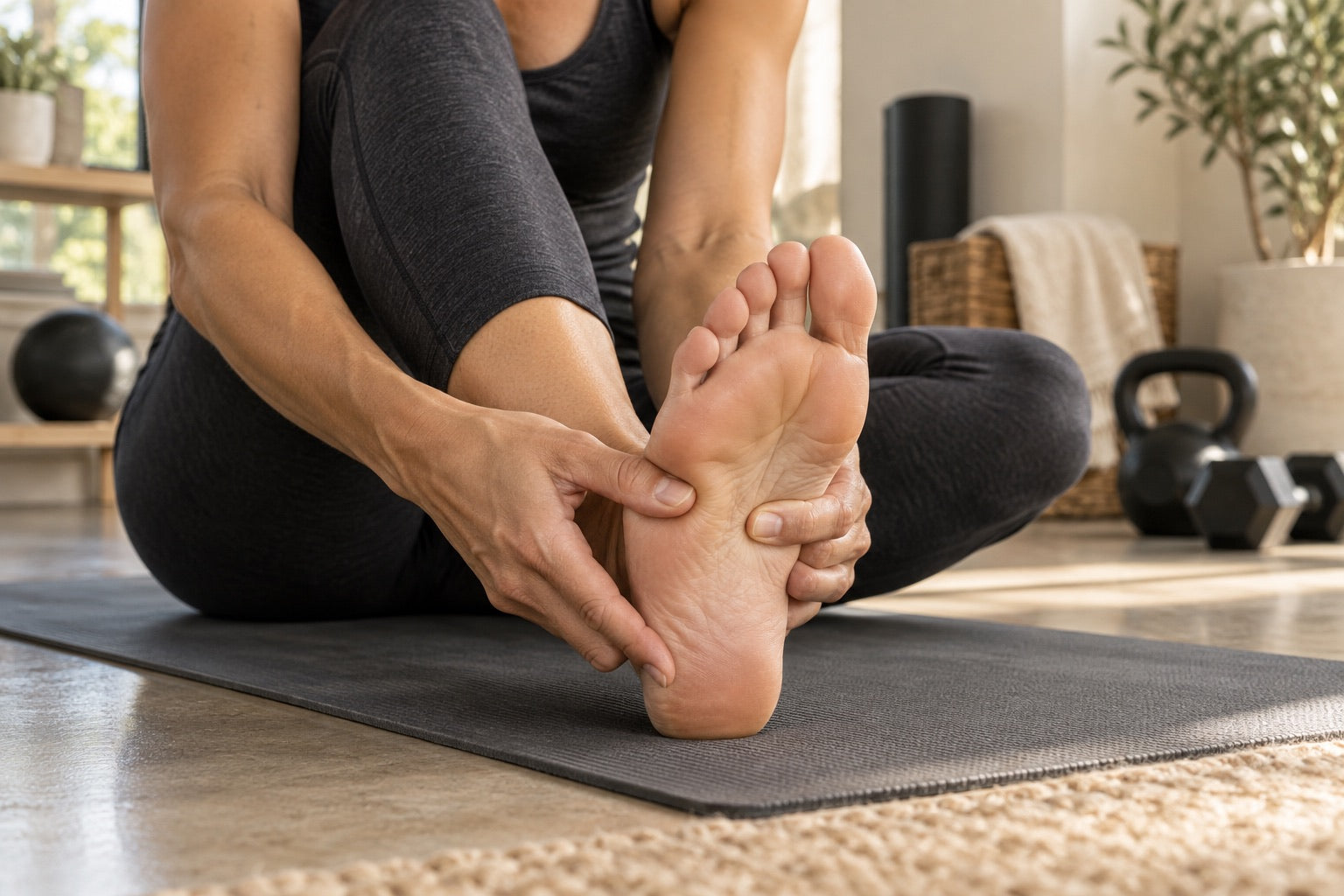
Key points
- First-step heel pain is a common symptom.
- Similar symptoms can have other causes.
- Stretching and strengthening support recovery.
- Inserts can complement a broader treatment plan.
- Recovery varies and can take months.
What plantar fasciitis is
The plantar fascia is a band of connective tissue that runs from the heel to the toes and helps support the arch. Plantar fasciitis causes pain around its attachment to the heel, often with the first steps after rest.
Risk factors
Body weight, time on your feet and ankle movement can all play a role. A case-control study compared people with plantar fasciitis with people without it.
BMI over 30
5.6× the odds of plantar fasciitis
Compared with a BMI of 25 or below.
Most of the workday on your feet
3.6× the odds of plantar fasciitis
Compared with people who did not spend most of their workday on their feet.
Limited ankle movement
Restricted upward movement
Reduced ankle flexibility was also associated with plantar fasciitis.
These are associations from one case-control study, not a prediction of your individual risk. BMI is a body-mass index, not a percentage.
Symptoms to look for
These symptoms can suggest plantar fasciitis. A clinician considers the overall pattern and other possible causes.
First-step heel pain
Pain when you get out of bed or stand after sitting.
Tenderness near the heel
A sore area on the underside of the heel, often toward the inside edge.
Pain with stretching
Moving the toes upward can reproduce pain. This alone does not confirm a diagnosis.
Other causes of heel pain
Heel pain can come from several conditions. This comparison is a starting point for a conversation with a clinician.
| Condition | Pain location | Distinguishing feature |
|---|---|---|
| Heel spurs | Bottom of heel | Can occur alongside plantar fasciitis, but many heel spurs cause no pain. Read the heel spurs guide. |
| Calcaneal stress fracture | Bottom or side of heel | Constant pain that worsens with weight-bearing; doesn't ease with movement. Squeeze test reproduces pain. |
| Tarsal tunnel syndrome | Inside ankle, radiating to arch | Burning, tingling, numbness. Tinel's sign at the medial ankle is positive. |
| Fat pad atrophy | Center of heel | Worse with thin shoes; deep palpation reveals thinned cushion. Common in older adults. |
| Achilles tendinopathy | Back of heel, not bottom | Pain at the Achilles insertion or 2-6 cm above the heel. |
Structure and cushioning at a glance
Cushioning
A softer surface
Compressible materials can soften contact and improve comfort.
Structural support
A shaped foundation
A firm contour supports the heel and arches. This is the role of FCSS™ Pro.
Recovery takes time
There is no fixed recovery deadline. Improvement can take several months, and the plan should change with your symptoms.
Start with a plan
Reduce activities that aggravate pain. Work on stretching, strength and suitable footwear.
Build back gradually
Increase activity as symptoms allow. Lower-impact exercise can help you stay active.
Reassess persistent pain
If symptoms persist or worsen, ask a clinician to review the diagnosis and treatment.
Three details.
One solid foundation.

Get to know the structure beneath your feet. Select a numbered callout or a feature to see how they connect.
Evidence-based interventions
First Line
Build a consistent care plan
- Stretching: Target the plantar fascia and calf.
- Strengthening: Build foot and ankle strength.
- Physical therapy: Address movement and flexibility restrictions.
- Taping and inserts: Use alongside other treatments, rather than as the whole plan.
Second Line
Review additional options
If symptoms persist, a clinician can reassess the diagnosis and discuss treatments such as shockwave therapy. Injections require a discussion of benefits and risks.
Night splints may help consistent first-step morning pain and can also be used earlier when appropriate.
Surgery is reserved for selected cases that have not improved with prolonged nonsurgical care.
When to get checked
Seek prompt medical assessment if you cannot bear weight, or if pain follows an injury. Persistent or worsening pain, numbness, tingling or burning also deserves a clinical assessment.
Frequently asked questions
How long does recovery take?
Recovery varies and can take several months. Persistent or worsening pain deserves a reassessment.
Can inserts help?
They may help pain and function when combined with other treatments. An insert alone is not a complete recovery plan.
Do I need custom orthotics?
Not necessarily. Some trials found similar outcomes with prefabricated and custom devices. A clinician can assess your needs.
Will cushioning help?
Cushioning can improve comfort. It serves a different purpose from a shaped support.
Why does it hurt in the morning?
Pain with the first steps after rest is a common symptom. It does not confirm the diagnosis by itself.
Can I keep running?
Reduce activities that worsen pain. Lower-impact exercise may be a useful alternative while you recover.
Are heel spurs the same thing?
No. A heel spur is a bony growth. Many people with heel spurs have no heel pain. Read the heel spurs guide.
Must I wear inserts forever?
The studies cited here do not establish a lifelong requirement. Review ongoing use according to your symptoms and needs.
The WYATT takeaway
Start with the right fit.
Choose an insert that fits your foot and shoe, alongside stretching, strengthening and appropriate activity changes. Paying more for custom orthotics does not automatically mean better results: trials have found similar outcomes with some prefabricated and custom devices. Individual needs still matter.
Comparing your options? Use our plantar fasciitis inserts buying checklist to compare shoe fit, construction, sizing and purchase terms before choosing a pair.
Shop FCSS™ ProFor informational purposes only, not medical advice. See a licensed clinician for persistent or severe pain.
Related reading
Sources
- Koc TA Jr, Bise CG, Neville C, et al. "Heel Pain — Plantar Fasciitis: Revision 2023." Journal of Orthopaedic & Sports Physical Therapy. 2023. JOSPT 2023 CPG.
- Hawke F, Burns J, Radford JA, du Toit V. "Custom-made foot orthoses for the treatment of foot pain." Cochrane Database of Systematic Reviews. 2008. PMID: 18646168.
- Landorf KB, Keenan AM, Herbert RD. "Effectiveness of foot orthoses to treat plantar fasciitis: a randomized trial." Archives of Internal Medicine. 2006. PMID: 16801514.
- Pfeffer G, Bacchetti P, Deland J, et al. "Comparison of custom and prefabricated orthoses in the initial treatment of proximal plantar fasciitis." Foot & Ankle International. 1999. PMID: 10229276.
- DiGiovanni BF, Nawoczenski DA, Lintal ME, et al. "Tissue-specific plantar fascia-stretching exercise enhances outcomes in patients with chronic heel pain." Journal of Bone and Joint Surgery (Am). 2003. PMID: 12826724.
- Riddle DL, Pulisic M, Pidcoe P, Johnson RE. "Risk factors for Plantar fasciitis: a matched case-control study." Journal of Bone and Joint Surgery (Am). 2003. PMID: 12728038.
- Buchbinder R. "Plantar fasciitis." New England Journal of Medicine. 2004. PMID: 15152061.
- McKeon PO, Hertel J, Bramble D, Davis I. "The foot core system: a new paradigm for understanding intrinsic foot muscle function." British Journal of Sports Medicine. 2015. PMID: 25767152.
- American Academy of Orthopaedic Surgeons. Plantar Fasciitis and Bone Spurs.