Built Because No One Else Would.
How a motorcycle wreck, pain motivation, and a third-generation craftsman built the orthotic no podiatrist would prescribe.
The Accident
120mph & Untied Tennis Shoes
Tony Wyatt laid a motorcycle down at 120 mph in a pair of tennis shoes that weren’t even tied. He foot was killing him the next day, but he had no idea exactly what he was in store for. Like most, Tony couldn’t afford to slow down. And when it rains, it pours—rent was due the next day and his only mode of transportation was trashed. So the next day he had no choice but to walk, more than a mile, to go pay rent.
For the next twelve years, he walked on that foot, and limping became just how he moved. Customers at the shop knew him as the guy who limped.
“If I sat down for five minutes and stood back up, it felt like I’d just stepped on razor blades.” — Tony Wyatt
The podiatrists were straightforward: surgery was the fix, and he’d carry the scar tissue the rest of his life. He’d already tried what was available — custom orthotics, the strap-on night splint, the walking boot. Nothing worked. Several made it worse.
The Experiment
An Orthotics Lab Was Born
One night, Tony’s brother Ricky sat down with him to figure out a solution — and a concept came out of it. Not an orthotic that bridged a collapsed arch. One molded around an ideal foot, so Tony’s would have something to strive for.
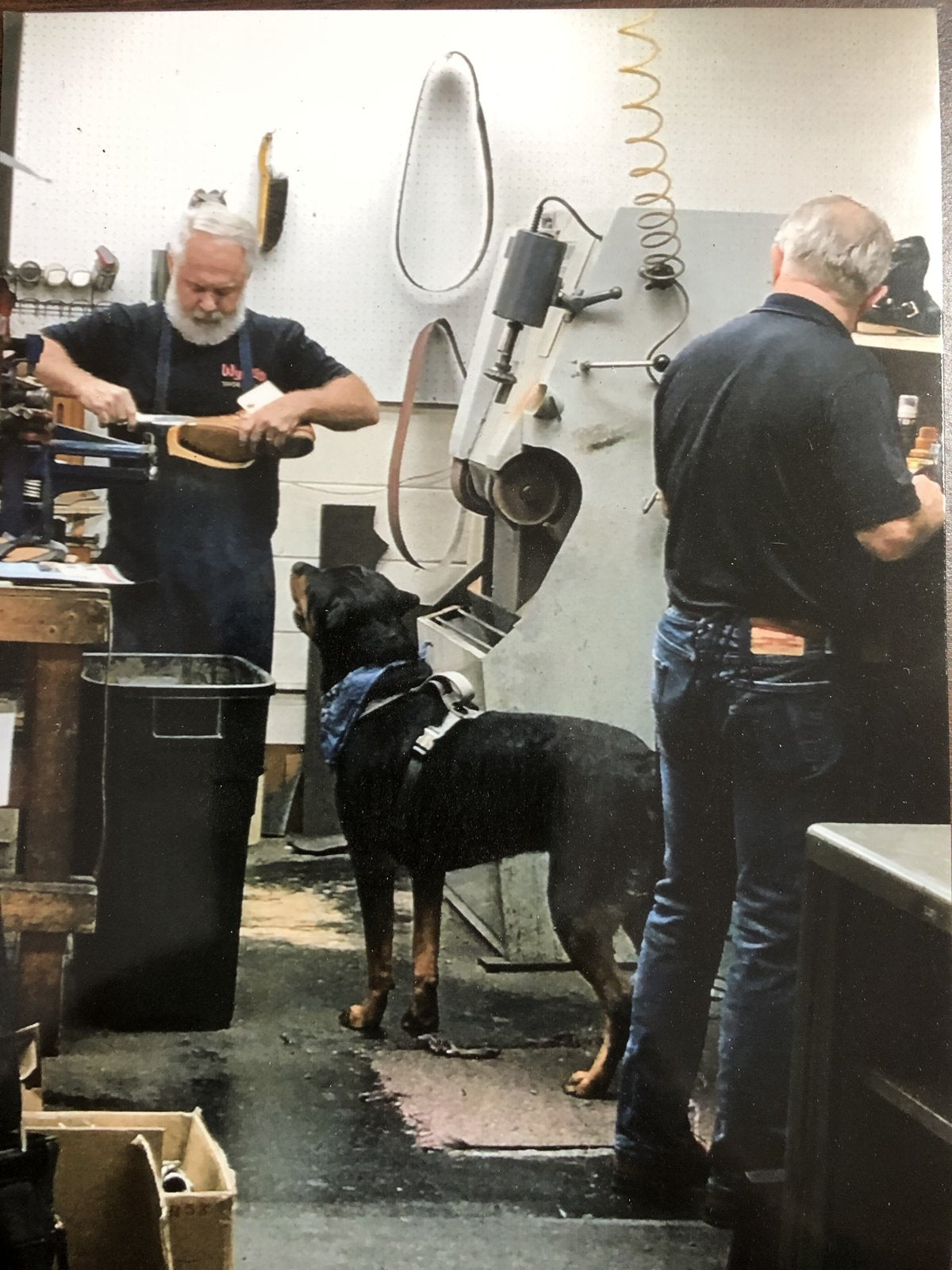
Their father came in and helped them build the machinery to make the first mold, and Tony became patient zero.
“Within a few days, I wasn’t limping anymore.” — Tony Wyatt
What started as a fix for his brother sparked Ricky’s curiosity in the field. He went on to become a board-certified Pedorthist — and the deeper he got into the science of the body, the more it confirmed how rare what they’d built actually was.
The Demand
“Make Me A Pair.”
Regulars at the shop noticed Tony wasn’t limping anymore, and they started asking if they could purchase a pair for themselves. Tony and Ricky warned them up front — these were custom, took days to make, and the price was steep, but they didn’t care. People said, “If it makes my feet better and I stop hurting I will pay anything!”
So the Wyatts began working on a process to be able to provide their customers who were struggling with the same conditions, with the orthotic they designed for Tony—the ideal contour for a strong, healthy foot. Not just a mold of an already broken foot.
Tony is 60 years old. He runs half marathons. He’s done triathlons. He runs in minimalist barefoot shoes because his feet are strong enough that he prefers it. He can run on the beach in soft sand. None of that was possible after the accident — and he’s worn FCSS™ Pro every day since.
“Not because he has to. Because they still work.”
Shop FCSS™ Pro