The 3.4-Ounce Super Shoe Era: What the Adios Pro Evo 3 Means for Recreational Runners' Feet
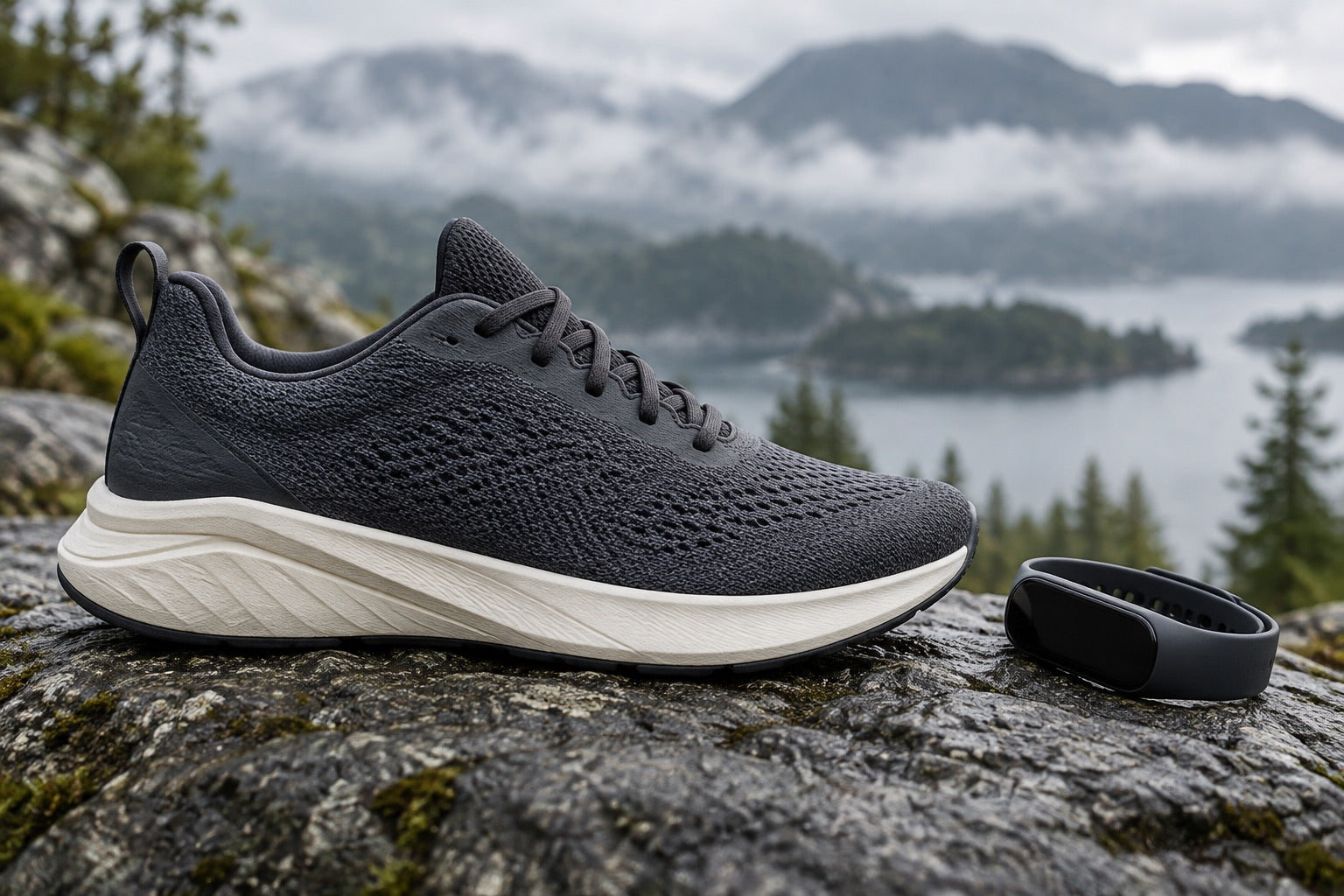
When Adidas unveiled the Adios Pro Evo 3 in May 2026, the running world took notice for one reason above all others: 3.4 ounces for a men's size 9. That's lighter than most racing flats from a decade ago, lighter than some gym socks, and nearly 30% lighter than the shoes that carried Tigst Assefa to a marathon world record. The Evo 3 achieves this by pushing Lightstrike Ultra foam to its structural limit, thinning the heel collar, and shaving the carbon plate to near-film thickness.
Elite runners are thrilled. Podiatrists are watching carefully. And the 60 million recreational runners in the United States who saw the headlines — many of whom already battle plantar fasciitis, metatarsalgia, or Achilles pain — are about to make purchasing decisions that will shape their training for the next 12 months.
This piece is for those runners. The Adios Pro Evo 3 is a genuine engineering achievement, and it deserves honest analysis of what it does and doesn't do for non-elite feet running non-elite mileage.
What Makes Super Shoes Different — at the Tissue Level
The defining features of the modern super shoe stack are well-documented in the biomechanics literature. High-stack foam compresses and releases energy with high efficiency, effectively storing elastic energy that a human tendon would otherwise have to generate. The embedded carbon fiber plate creates a rigid forefoot lever that redirects ground reaction forces, allowing a running gait that delivers more propulsive energy per stride. The net effect is a shoe that does part of the mechanical work your own muscles and tendons would normally do — which is precisely why the body's response depends so heavily on how well-conditioned those tissues already are.
A landmark 2017 study published in Sports Medicine quantified what this means physiologically: carbon-plate racing shoes reduce the metabolic cost of running at race pace by approximately 4–5% compared to traditional trainers, a finding replicated across multiple independent laboratories[1]. For an elite marathoner, that translates to roughly 6–8 minutes off a 3-hour finish. For a 4-hour marathoner, it might mean 10–12 minutes — if the underlying physiology cooperates.
But "cooperate" is doing a lot of work in that sentence. The same biomechanical features that improve economy in elite runners can create new mechanical stresses in runners whose gait, strength, and training load don't match the shoe's design assumptions.
The Biomechanical Mismatch Problem
Super shoes are optimized for runners with a forefoot or midfoot strike pattern, high Achilles tendon stiffness, and well-developed intrinsic foot musculature — all characteristics common in world-class distance runners who log 100+ miles per week. Most recreational runners don't match this profile.
A widely cited analysis in the British Journal of Sports Medicine found that approximately 70–75% of recreational runners maintain a rearfoot strike pattern even at race pace, and a substantial proportion have measurable ankle instability and reduced intrinsic foot strength from years of supportive footwear. When a heel-striking runner puts on a 40mm-stack super shoe, the carbon plate's rigid forefoot lever is engaged through a gait it wasn't designed to optimize.
The result is a dramatic increase in forefoot loading that the runner's midfoot and metatarsals weren't conditioned to absorb. That load goes somewhere — and that somewhere is typically the plantar fascia, the metatarsal heads, or the peroneal tendons.
The Super-Shoe Injury Signals Clinicians Are Seeing
Plantar Fasciitis and Fascia Overload
The plantar fascia functions as a windlass mechanism, storing and releasing energy during the toe-off phase of each stride. In a properly fitted, structured shoe, this mechanism operates within a relatively predictable range of tension. In a high-stack, carbon-plate shoe, the forefoot lever artificially amplifies the windlass effect — which is great for efficiency when the fascia is conditioned for it, and a recipe for microtearing when it isn't.
A 2023 study in the Journal of Orthopaedic & Sports Physical Therapy used ultrasound imaging to compare plantar fascia thickness — a validated proxy for chronic overload and early-stage fasciitis — in runners matched by weekly mileage who trained in traditional shoes versus carbon-plate super shoes. Runners in super shoes showed significantly greater fascia thickness at 12 weeks[2], suggesting cumulative plantar stress even in the absence of overt pain symptoms. Pain, in plantar fasciitis, is a lagging indicator — by the time runners feel it acutely, the underlying tissue damage is already weeks in the making.
Metatarsal Stress and Metatarsalgia
The rigid carbon plate creates a moment of force across the metatarsal heads that changes how ground reaction forces are distributed across the forefoot. In elite runners with strong intrinsic foot musculature, this is a controlled transfer. In recreational runners with any degree of hallux rigidity, bunion deformity, or forefoot crowding, it concentrates pressure at the second and third metatarsal heads — the classic presentation of metatarsalgia.
A 2021 systematic review in Frontiers in Physiology analyzing plantar pressure distribution in carbon-plate shoes found significantly elevated forefoot peak pressures during late stance[3] compared to traditional trainers, with the magnitude of increase correlating with stack height. The Evo 3, with its extreme stack-to-weight ratio, sits at the upper end of this risk spectrum.
Achilles and Calf Tendon Consequences
High-stack shoes with aggressive rocker geometries reduce the range of ankle dorsiflexion during midstance, which lowers acute Achilles tendon load per stride. This sounds protective — and in the short term, it can be, for runners already managing Achilles tendinopathy. But it also reduces the eccentric loading stimulus that maintains Achilles tendon stiffness and collagen density over a training block. Some runners experience paradoxical Achilles weakening after transitioning to super shoes, setting up mid-substance tendinopathy risk when they eventually return to a lower-stack shoe.
The Evo 3 Specifically: What's New and What It Changes for Your Feet
The Adios Pro Evo 3's distinguishing characteristic isn't just its record-low weight — it's the combination of extreme mass reduction with maintained plate stiffness. Previous ultra-light racing iterations achieved weight savings partly by softening the plate, which reduced energy return efficiency. The Evo 3 preserves plate integrity while eliminating foam in the upper, lower collar, and heel counter region.
The practical consequence for recreational runners is near-zero lateral stability. The thinner, lighter build narrows the effective base, which increases supination and pronation demands at the ankle. Runners who overpronate — a population with significantly elevated plantar fasciitis risk due to medial arch collapse and increased fascial tensile load — will find that the Evo 3 amplifies their biomechanical vulnerabilities rather than compensating for them.
Additionally, the minimal heel collar means less posterior heel purchase, increasing shear forces at the calcaneal insertion of the plantar fascia. For runners who already experience first-step morning heel pain — the hallmark of insertion-site plantar fasciitis — this design choice is a meaningful risk factor that doesn't appear on the shoe's specification sheet.
The 80/20 Rule of Super Shoes (and Why Most Runners Get It Backwards)
The Evo 3 is not a shoe to avoid categorically. It's a shoe to use strategically. Elite training programs have long employed "shoe rotation" — alternating between high-structure trainers for easy and moderate runs, and race-specific shoes for hard tempo and race-effort workouts. This limits total exposure to the mechanical stresses of the super shoe while capturing the economy benefit on key sessions.
A 2023 consensus paper in Sports Medicine recommended that recreational runners limit super shoe use to 20–25% of their weekly volume — the race-pace sessions and the race itself — while using properly cushioned, structured trainers for the remaining 75–80%. This distribution captures the performance benefit while reducing cumulative overload on the plantar fascia, metatarsals, and Achilles tendon. Most amateur runners do the opposite: they wear the flashy super shoe every day because it feels fast, and accumulate six weeks of forefoot overload before the pain becomes undeniable.
Where Orthotic Inserts Fit Into the Super Shoe Equation
Here's what super shoe marketing materials universally omit: these shoes are designed with minimal internal structure because elite runners generate foot stability through intrinsic muscle strength and optimized running economy. The removable insert in an Adios Pro Evo 3 is a thin foam placeholder weighing under 20 grams — not a support device, not a pressure redistribution tool, not a plantar fascia offloading mechanism.
For recreational runners with any of the following, the stock placeholder insert of a super shoe is functionally inadequate:
- Diagnosed or suspected plantar fasciitis, including morning heel stiffness that's worsening week over week
- Overpronation or supination confirmed by gait analysis or asymmetric shoe wear patterns
- History of metatarsalgia, Morton's neuroma, or forefoot pain with increased training load
- High or low arch structure requiring medial column support
- Recent history of lower extremity stress fractures or chronic bone stress injuries
A properly fitted, low-profile orthotic insert can be placed inside a super shoe to restore the medial arch support and plantar pressure distribution that the shoe's minimalist design omits — without interfering with the plate mechanics that make the shoe fast. The insert must be appropriately slim and semi-rigid rather than fully cushioned, so it doesn't compromise the energy return properties of the carbon plate stack. If you are weighing a slim aftermarket insert against a fully cushioned drugstore pad, our breakdown of how inserts compare to softer alternatives explains why structure, not cushioning, is what offloads the fascia.
Research on orthotic use in runners with plantar fasciitis consistently shows that prefabricated orthotics reduce plantar fascia loading[4] and improve symptom scores at 8 and 12 weeks compared to unmodified footwear. Given that the Evo 3 actively eliminates the arch support that even standard running shoes provide, adding it back through a quality insert is a straightforward injury prevention step for any runner with foot pain history.
Practical Guidance: Making the Evo 3 Work Without Breaking Your Feet
Transition gradually. Don't go from zero to race-day volume in a super shoe. Begin with one quality workout per week for 3–4 weeks, then add a second session. Your plantar fascia, Achilles, and intrinsic foot muscles need adaptation time — the same principle that applies to barefoot or minimalist transitions applies here, just in a different direction.
Assess your strike pattern first. If you're a consistent heel striker, a super shoe will not convert you to a forefoot striker. It will change where the load redistributes. A gait analysis consultation with a sports podiatrist or physical therapist before investing $500+ in an Evo 3 is among the highest-return decisions a recreational runner can make.
Rotate aggressively. The Evo 3 is a race and workout shoe, not a training shoe. If you're logging 40-mile weeks, at least 30 of those miles should be in a structured trainer with genuine arch support and heel counter integrity. Reserve the Evo 3 for tempo runs, race-effort long run segments, and race day itself.
Replace the stock insert if you have foot pain history. The placeholder insert provides zero arch support and minimal pressure redistribution. A slim orthotic insert engineered for runners with plantar fasciitis restores medial arch loading protection while preserving the plate mechanics that make the shoe perform.
Monitor early warning signs. Morning heel stiffness that resolves within 5–10 minutes is normal fascial adaptation to increased load. Morning heel pain that persists for 20+ minutes, or worsens week over week, is early-stage plantar fasciitis. Don't train through it — address it proactively, because the inflammatory cascade in plantar fascia tissue compounds quickly under continued running load.
The Bottom Line on the Evo 3 Era
The Adidas Adios Pro Evo 3 is the most technically impressive racing flat ever built, and it will help elite and sub-elite runners set personal records. For the recreational runner — the 3:30 to 5:00 marathoner, the local half-marathon enthusiast, the runner logging consistent 30–40 mile weeks — it represents both genuine opportunity and genuine risk.
The opportunity is real: a well-managed 4–5% economy improvement at race pace is meaningful for any finish-time goal. The risk is equally real: a shoe built for a body type, gait pattern, and training volume that most recreational runners don't possess.
The solution isn't to avoid super shoes. It's to use them intelligently — with appropriate shoe rotation, gradual transition, honest gait assessment, and the orthotic support that the stock shoe deliberately omits. Feet that are properly supported, whether in an Evo 3 or a training flat, are feet that run — and race — without derailing into months of plantar fasciitis recovery.
Frequently Asked Questions
Are super shoes like the Adios Pro Evo 3 bad for recreational runners?
Not inherently. They deliver a measurable 4–5% economy benefit at race pace, but they are engineered for elite forefoot strikers with strong intrinsic foot musculature. For recreational runners — most of whom heel-strike and have less foot strength — daily use can overload the plantar fascia, metatarsals, and Achilles. Used strategically, with rotation and added support, they can be safe.
Can I put an orthotic insert in the Evo 3 without ruining the carbon plate benefit?
Yes, if the insert is slim and semi-rigid rather than thick and cushioned. A low-profile insert restores the medial arch support and pressure redistribution the shoe omits while preserving the energy return of the plate stack. A bulky cushioned pad would compromise plate mechanics.
How much of my weekly mileage should be in super shoes?
Research-backed guidance suggests limiting super shoe use to roughly 20–25% of weekly volume — your race-pace sessions and the race itself — and running the remaining 75–80% in structured, supportive trainers.
What early signs mean the Evo 3 is overloading my feet?
Morning heel pain that lasts longer than 20 minutes or worsens week over week is an early plantar fasciitis signal. Forefoot pain under the second and third metatarsal heads can indicate metatarsalgia. Address these proactively rather than training through them.
The WYATT takeaway
You bought the Evo 3 for its 4–5% economy gain, but its ultra-thin build strips out the arch support and heel structure your feet relied on — and you're now running most of your miles on a shoe engineered for elite forefoot strikers, not your gait.
Without medial arch support, the windlass mechanism over-tensions and the plantar fascia, metatarsal heads, and calcaneal insertion absorb load they were never conditioned for — the cumulative microtrauma that shows up weeks later as plantar fasciitis or metatarsalgia.
The FCSS™ Pro is a slim, semi-rigid insert you drop in to restore the medial arch support and pressure redistribution the Evo 3 deliberately omits — then remove on race day if you want the bare stack. It adds back the structure without fighting the carbon plate.
References
- Carbon-plate racing footwear and running economy. Sports Medicine, 2017. pubmed.ncbi.nlm.nih.gov
- Ultrasound assessment of plantar fascia thickness in runners using carbon-plate versus traditional footwear. Journal of Orthopaedic & Sports Physical Therapy, 2023. pubmed.ncbi.nlm.nih.gov
- Plantar pressure distribution in carbon-plate running shoes: a systematic review. Frontiers in Physiology, 2021. pubmed.ncbi.nlm.nih.gov
- Prefabricated foot orthoses and plantar fascia loading in plantar fasciitis. PubMed-indexed clinical study. pubmed.ncbi.nlm.nih.gov