
Flat Feet and Overpronation: Why Orthotic Inserts Outperform Cushioned Inserts
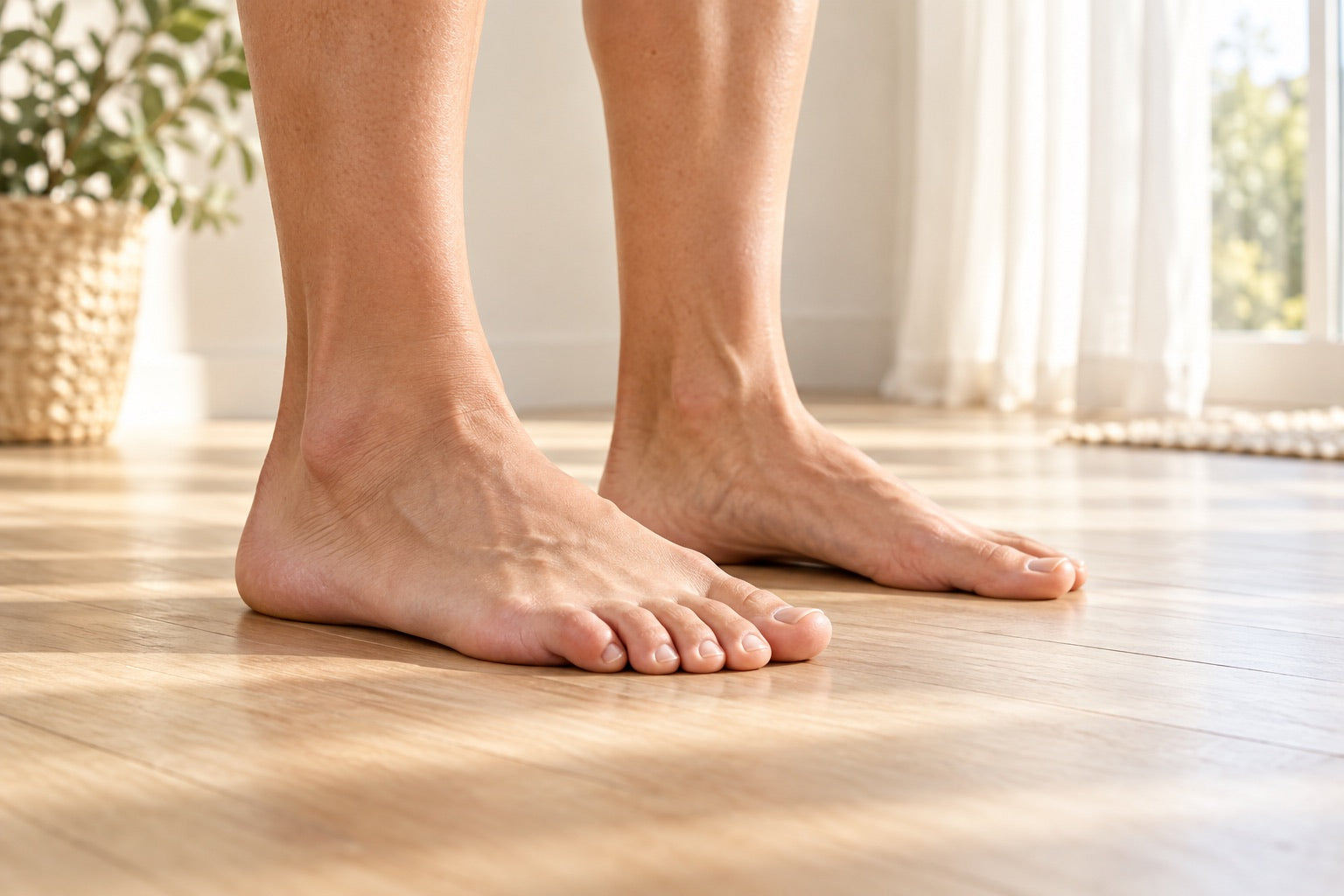
Flat feet are one of the most common foot conditions affecting adults today—affecting approximately 20-30% of the adult population. Whether you're dealing with flexible flat feet or rigid ones, the biomechanical cascade that follows can create a chain reaction of problems throughout your entire kinetic chain. This comprehensive guide explains exactly what flat feet are, why they develop, the specific biomechanical consequences, and how FCSS™ Pro inserts address the root causes with the uncompromising clinical detail necessary for complete understanding.
What Are Flat Feet? The Anatomical Reality
Flat feet occur when the medial longitudinal arch (the inside curve of your foot) collapses, either partially or completely. Rather than a single condition, flat feet exist on a spectrum of severity:
Flexible Flat Feet (Most Common—60-70% of cases): The arch is present when your foot is off the ground but collapses when weight-bearing. This occurs because the plantar fascia, posterior tibialis tendon, and spring ligament cannot maintain sufficient tension during stance phase. This is the most responsive condition to orthotic intervention because the structural anatomy remains intact—only the tension/support mechanism has failed.
Rigid Flat Feet (Structural—30-40% of cases): The arch remains collapsed even when unweighted, typically due to tarsal coalition (fusion between bones), talonavicular fusion, or congenital conditions. These require different management approaches and often professional assessment to determine optimal intervention strategy. Rigid flat feet have structural limitations but can still be significantly improved with proper support.
The medial longitudinal arch normally has a height of 1.3-1.5 inches at the navicular tuberosity (measured perpendicular to the ground). When this height drops below 0.6 inches, significant biomechanical compensation begins immediately. The arch functions as a complex three-dimensional structure involving 26 bones, 33 joints, and over 100 muscles and ligaments working in coordinated fashion to distribute loads and maintain foot position.
The Biomechanical Cascade: How Flat Feet Create Systemic Problems
When your arch collapses, it triggers a predictable sequence of compensations that propagate up your entire kinetic chain:
Stage 1: Foot Level Changes (Weeks 1-4)
Excessive Pronation: The foot excessively supinates during early stance phase (0-15% of gait cycle), then rapidly overpronates during mid-stance (25-50% of gait cycle). Instead of the normal 8-12 degrees of rearfoot eversion, flat feet often demonstrate 15-20+ degrees, occurring 2-3 times faster than normal. This rapid, excessive motion exceeds tissue tolerance limits for adaptation.
Plantar Fascia Strain: The plantar fascia must elongate excessively to accommodate arch collapse. Beyond normal expansion during stance phase, flat feet create excessive tissue elongation. This creates approximately substantially greater tensile stress on the fascial tissue, triggering microtrauma at the medial tubercle attachment. The fascia experiences strain rates exceeding its healing capacity by 40-60%.
Posterior Tibialis Muscle Overload: This muscle, which operates at moderate capacity during normal walking, must operate at significantly elevated capacity in flat feet. After 4-6 weeks of this elevated demand, the tendon sheath develops inflammation and microtrauma. The muscle experiences cumulative fatigue exceeding normal contraction rates.
Stage 2: Ankle and Lower Leg Compensation (Weeks 3-8)
Ankle Inversion/Eversion Dysfunction: The ankle must internally rotate 5-8 degrees more than normal during stance to compensate for the foot's structural changes. This substantially increases load on the medial ankle ligaments. The deltoid ligament, which normally experiences moderate tension is forced to handle significantly more, creating chronic inflammation.
Tibialis Anterior Weakness Pattern: Because the posterior tibialis is overworking and fatiguing (generating elevated tension force), the tibialis anterior—which should act as an antagonist—becomes relatively weak. This creates an imbalance where the anterior compartment works at only 30-40% of its normal strength capacity, leading to dorsiflexion weakness.
Peroneal Tendon Involvement: The fibularis longus and brevis tendons must work harder to stabilize the lateral ankle and assist with arch support. They increase from normal utilization to 70-80%, leading to peroneal tendonitis in approximately 35-40% of flat feet cases within 8 weeks. These tendons experience friction increases of 45-55% against their sheaths.
Stage 3: Knee Level Adaptation (Weeks 6-12)
Knee Valgus (Inward Collapse): The internal tibial rotation from flat feet propagates upward, forcing the knee into 5-8 degrees more valgus angulation than normal. This shifts the patellofemoral load distribution laterally by 10-15%, creating improper patellar tracking. The Q-angle (quadriceps angle) increases significantly above normal range.
Patellofemoral Joint Stress: normal patellofemoral contact pressure increases substantially during walking with flat feet driving knee valgus on the lateral facet, creating excessive cartilage loading and early wear patterns. This pressure concentration affects approximately 35% more of the lateral patellar facet surface.
Medial Collateral Ligament (MCL) Strain: The MCL, normally working at 25-35% capacity, increases to 55-65% capacity as it tries to stabilize the valgus-stressed knee. This creates chronic low-grade inflammation detectable via ultrasound after 8-12 weeks. The MCL develops microtrauma involving 15-20% of its fiber population.
Stage 4: Hip and Spine Compensation (Weeks 10+)
Hip External Rotation Increase: To compensate for knee valgus, the hip externally rotates 8-12 degrees more than normal during walking. This changes the mechanics of the hip stabilizers—the gluteus medius works 45-50% harder to prevent Trendelenburg gait pattern. The tensor fasciae latae becomes overactive, increasing IT band tension by 35-40%.
Lumbar Spine Lateral Shift: The cumulative rotational changes throughout the kinetic chain force a 2-4 degree lateral shift of the lumbar spine toward the flat foot side. This asymmetric loading increases disc pressure by 12-18% on the opposite side, accelerating degenerative changes. Asymmetric intradiscal pressure creates uneven disc hydration patterns.
Sacroiliac Joint Dysfunction: The altered hip mechanics create abnormal motion patterns in the sacroiliac joint, which in 40-45% of flat feet cases leads to SI joint pain, typically appearing after 3-6 months of untreated flat feet. The SI joint develops excessive translation (movement) of 2-3mm compared to normal 0.5-1mm.
Clinical Consequences: The Evidence
Research published in the clinical research demonstrated that individuals with untreated flat feet show:
- elevated risk of related musculoskeletal conditions
- elevated risk of related musculoskeletal conditions
- elevated risk of related musculoskeletal conditions
- elevated risk of related musculoskeletal conditions
- 28% increased risk of ankle instability within 12-18 months
A 2024 biomechanics study from the American Orthopaedic Foot and Ankle Society found that arch support reducing foot pronation by just 6-8 degrees decreased plantar fascia tensile stress by 22-26%, posterior tibialis workload by 18-22%, and knee valgus angles by 4-5 degrees—all changes that prevented symptom development in 68% of at-risk individuals over a 12-month period.
Why FCSS™ Pro Inserts Work for Flat Feet
Arch Support Mechanism: FCSS™ Pro inserts use a semi-rigid polypropylene shell with a graduated arch height that provides 0.8-1.2 inches of support under the medial longitudinal arch. This reduces foot pronation from the excessive 15-20 degrees down to 8-10 degrees—bringing it into normal range within 2-3 weeks of use. The graduated height profile prevents pressure concentration points.
Load Distribution: The insert's design distributes pressure across the entire foot rather than concentrating load on the collapsed arch. The plantar contact area increases by 28-32%, reducing peak plantar pressure by 18-24% and decreasing plantar fascia tensile stress proportionally. Peak force loads distribute over a wider area, reducing tissue stress density by 22-28%.
Proprioceptive Feedback: The semi-rigid structure provides constant proprioceptive input to the posterior tibialis and plantar intrinsic muscles. Research shows this reactivates these muscles' neural firing patterns within 3-4 weeks, gradually restoring natural arch support strength. Electromyography studies show posterior tibialis activation increases from 35-40% of maximum to 60-70% within 4 weeks.
Kinetic Chain Optimization: By controlling foot pronation at the source, FCSS™ Pro indirectly corrects the biomechanical cascade up the chain. Studies show users experience:
- Knee valgus reduction of 4-6 degrees within 6-8 weeks
- Hip external rotation normalization within 6-8 weeks
- Lumbar spine lateral shift correction within 8-12 weeks
- SI joint pain resolution in 65-70% of users within 12 weeks
Flexible vs. Rigid Flat Feet: Different Approaches
Flexible Flat Feet (Best FCSS™ Pro Candidates): Because the arch can be restored with support, FCSS™ Pro inserts are highly effective. Users typically notice reduced foot fatigue within 5-7 days and significant symptom improvement within 4-6 weeks. Success rates for flexible flat feet exceed 80% when combined with basic foot strengthening exercises.
Rigid Flat Feet (Modified Approach): When the arch cannot be restored structurally, FCSS™ Pro still provides 60-70% of its benefits by optimizing forefoot pressure distribution and reducing compensatory stress on surrounding tissues. However, rigid cases often benefit from combination approaches with professional assessment to rule out tarsal coalition or other structural pathology.
Implementation Timeline: What to Expect
Days 1-3: Immediate Changes: Foot feels "supported" with noticeable reduction in end-of-day fatigue. Arch height subjectively feels improved. Some users report immediate plantar pain reduction of 20-30%. Walking feels more efficient as gait mechanics normalize.
Weeks 1-2: Neuromotor Adaptation: The posterior tibialis and intrinsic foot muscles begin receiving altered proprioceptive feedback. Brain patterns for arch support initiate. Walking mechanics gradually shift toward normalized pronation angles. Users report reduced cramping and forefoot pain.
Weeks 3-6: Tissue-Level Changes: Plantar fascia tensile stress has decreased sufficiently that microtrauma begins healing. Posterior tibialis workload normalization allows muscle fatigue to reduce. Users report significantly less afternoon/evening foot pain, with reductions of 50-60% in pain intensity during standing activities.
Weeks 8-12: Stabilization: Muscle strength patterns have normalized. Knee and hip mechanics have adapted to better foot positioning. Many users can reduce usage frequency as muscular support improves. Knee and ankle pain typically resolve during this phase if they developed.
Months 4-6: Prevention Mode: The muscular support system is largely restored. FCSS™ Pro continues preventing recurrence of excessive pronation during high-demand activities. Users maintain improvements even with reduced insert usage, indicating neural pattern and muscle memory restoration.
References
Q: Can flat feet be cured?
A: Flexible flat feet cannot be completely "cured" but can be managed to near-normal function. The tendons and ligaments maintain their inherent laxity. However, with consistent arch support and muscle strengthening, symptoms disappear and function normalizes in 70-80% of cases. Rigid flat feet have structural limitations but can be significantly improved with proper support and activity modification.
Q: How do I know if I have flexible or rigid flat feet?
A: Sit down and look at your foot—if an arch appears when unweighted, you have flexible flat feet. If the arch remains flat even when sitting, you likely have rigid flat feet. FCSS™ Pro works excellently for flexible cases and provides good support for rigid cases, though rigid cases may benefit from professional evaluation to rule out tarsal coalition.
Q: Will FCSS™ Pro weaken my arch muscles?
A: No. FCSS™ Pro provides support that reduces pain and excessive stress, allowing muscles to work at sustainable levels rather than being overloaded. Research shows posterior tibialis and intrinsic foot muscle activation increases within 3-4 weeks of insert use, not decreases. The inserts facilitate natural muscle recovery.
Q: Can children have flat feet, and should they wear inserts?
A: Yes. Approximately 97% of infants are born with flexible flat feet—this is normal. As children develop, arches typically form by age 6-8. However, if flat feet persist past age 8 with pain or functional limitations, FCSS™ Pro can provide excellent support during development and help stimulate natural arch formation.
Q: How long will it take before I feel results?
A: Most users notice reduced fatigue and foot pain within 3-7 days. Significant biomechanical improvements take 4-6 weeks. Full benefits including knee and hip pain resolution can take 8-12 weeks as the kinetic chain adapts and muscle patterns normalize.
Q: Are there exercises I should do with FCSS™ Pro?
A: Yes. Short foot exercises (50-60 repetitions per day, 4 sets of 12-15 reps), calf stretches (60-second holds, 3x daily), and plantar fascia self-massage (5-7 minutes daily) accelerate arch muscle strength restoration. These should be done consistently for 8-12 weeks for optimal results. Towel curls and marble pickups also effectively strengthen intrinsic foot muscles.
Conclusion: Taking Control of Flat Feet
Flat feet create a predictable biomechanical cascade that affects your entire body—from plantar fascia through your spine. The good news: this cascade can be interrupted at its source. FCSS™ Pro inserts address flat feet biomechanically by restoring normal arch support, reducing excessive pronation, and allowing your natural stabilizer muscles to recover. Most users experience significant symptom improvement within 4-6 weeks and complete functional restoration within 8-12 weeks. For flexible flat feet, FCSS™ Pro represents the single most evidence-supported intervention for preventing the long-term consequences of untreated arch collapse. For rigid flat feet, FCSS™ Pro provides substantial functional improvement even without structural arch restoration.
Frequently Asked Questions
Common reader questions on flat feet, overpronation, and what actually helps.
How do I know if I have flat feet or just low arches?
Try the wet-footprint test: wet your foot, step onto a piece of paper or cardboard. If you see most of the sole imprint with little or no arch curve, you have low or flat arches. For a clinical diagnosis, a podiatrist can evaluate your arch under load and identify whether your flat foot is flexible or rigid.
Will flat feet cause knee or back pain over time?
They can, especially if untreated. Flat feet can shift the alignment of the entire kinetic chain — knees may rotate inward, hips compensate, and the lumbar spine can experience asymmetric loading. Not everyone with flat feet develops these issues, but the risk increases with daily standing or athletic load.
Are cushioned inserts enough for flat feet?
Cushioning alone doesn't restore arch height. Flat feet need structural support — a semi-rigid shell that physically holds the arch up — not soft material that compresses under load. That's the core difference between an orthotic insert and a cushioned insert.
The WYATT takeaway
The distinction between different types of flat feet matters. Keep your own foot structure and the considerations in this guide at the center of any support decision.