
Father's Day: Don't Let Dad Ignore That Heel Pain
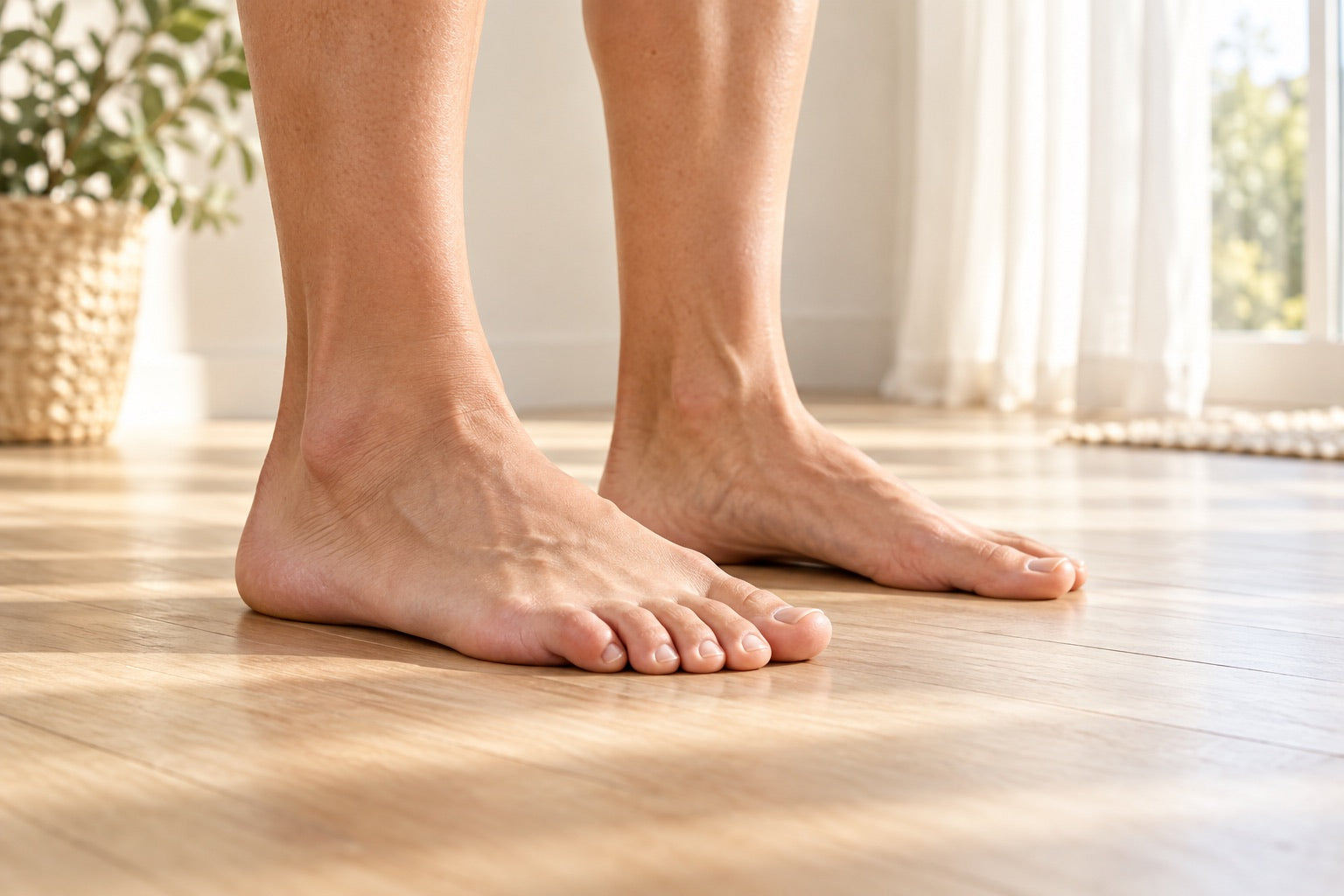
If there's a dad in your life who still plays a full 18, coaches the weekend travel team, knocks out the yard before lunch, or logs his miles before anyone else is awake, that's something worth celebrating. Staying active into your fifties and sixties is one of the most protective things a man can do for his heart, his metabolism, his joints, and his mind. The research on this is overwhelming and one-directional: men who keep moving age better, recover faster, and stay independent longer. So if Dad refuses to slow down, the instinct to keep him going is exactly right.
But there's a quiet catch hidden inside all that healthy activity — and it lives in the heel. The same decades of walking, standing, and weekend sport that keep a man fit also quietly remodel the tissues under his foot. By the time heel pain shows up, it's rarely a fluke. It's usually the foot finally registering a structural change that's been building for years. And because the men most likely to ignore it are exactly the ones who pride themselves on pushing through, Father's Day is a surprisingly good moment to talk about the one ache too many dads have decided to live with.
Why Heel Pain Peaks in the 'Dad Years'
Plantar fasciitis — the most common cause of stubborn heel pain — isn't a young person's injury or an old person's injury. It's a midlife injury. Large reviews of the condition consistently place its peak incidence between the ages of 40 and 60, with roughly one in ten people experiencing it at some point in their lives.[1] That window lines up almost perfectly with the years when men are juggling demanding careers, weekend warrior sport, coaching, travel, and home projects — in other words, peak dad.
The reason isn't bad luck. It's a convergence of factors that all tend to land in the same decade. Body weight often creeps up through the forties and fifties, and elevated body mass is one of the most consistently identified risk factors for plantar fasciitis in non-athletes.[2] Calf and Achilles tissue stiffen with age, which limits how far the ankle can bend and forces the plantar fascia to absorb more strain with every step. Add prolonged standing, a few too many miles ramped up too quickly, and shoes chosen for looks over support, and the heel becomes the place where all of it gets paid.
The Cushion Under the Heel Isn't Permanent
Here's the part most men don't know: the natural shock absorber built into the bottom of the heel changes with age, and not for the better. The heel fat pad is a remarkable piece of engineering — a dense, chambered cushion of fat held in place by fibrous walls that compress and rebound thousands of times a day to blunt the impact of heel strike. It's the reason a healthy young heel can pound pavement without complaint.
But that cushion is not a fixed asset. Research tracking heel fat pad thickness across the lifespan shows it tends to thin as people move from middle age into their later decades, and its shock-absorbing quality declines along with it.[3] A scoping review of heel fat pad problems describes how the pad's elastic, energy-returning structure degrades over time, leaving the heel bone less protected and more exposed to the ground forces it used to shrug off.[4] The collagen and elastin scaffolding that gives the pad its bounce simply doesn't hold up the way it did at 25.
This is why the 'just walk it off' approach fails so reliably in this age group. A younger athlete with a strained fascia is working with a full, springy heel cushion underneath. A 55-year-old is often working with a thinner, stiffer pad on top of an already-irritated fascia — two problems stacked on top of each other. The pain isn't weakness. It's mechanics.
The Kinetic Chain: Why a Stiff Calf Becomes a Sore Heel
The foot doesn't operate in isolation, and this is where the 'dad body' pattern really shows itself. The plantar fascia, the heel, the Achilles tendon, and the calf are all part of one continuous tension system. When the calf and Achilles tighten — which happens gradually with age and with years of sitting at a desk between bursts of weekend activity — they limit how far the ankle can dorsiflex, or bend forward over the planted foot.
That lost motion has to go somewhere. With the ankle unable to give, the plantar fascia is forced to stretch and strain more on every step to keep the body moving forward. Clinically, limited ankle dorsiflexion driven by calf tightness is recognized as a key contributor to plantar fascia overload.[2] It's a chain reaction: a stiff calf quietly taxes the fascia, the fascia develops the small degenerative tears that define plantar fasciitis, and the heel — already losing its fat-pad cushion — becomes the spot where the whole sequence announces itself first thing in the morning.
That morning signature is worth knowing. The hallmark of plantar fasciitis is sharp first-step pain when you get out of bed, which eases as you walk and then returns after long periods of standing. If that pattern sounds familiar, it's not a mystery to be endured — it's a recognizable, treatable mechanical problem, and we break down exactly what it means in our guide to morning foot pain after getting out of bed.
The Reason Dads Wait Too Long
None of this would matter much if men dealt with heel pain promptly. The trouble is that they often don't. Survey data on men's health is sobering: a widely cited Cleveland Clinic men's health survey found that about 65% of men avoid seeing a doctor for as long as possible, often because they're busy or assume the problem will resolve on its own.[5] Foot pain is the textbook example of exactly the kind of ache that gets filed under 'I'll deal with it later.'
The problem is that plantar fasciitis rewards early action and punishes delay. Caught early, it responds well to conservative measures — load management, calf and foot strengthening, and proper support. Left to simmer for months, it becomes a chronic, treatment-resistant version of itself that can drag on for a year or more and start changing how a man walks, which sends trouble up the chain to the knees, hips, and lower back. The dad who 'tweaked his foot in the spring' and is still limping in the fall didn't get unlucky. He got patient with the wrong thing.
What Actually Works — And Why Support Comes First
The good news is that plantar fasciitis and heel-pad-related heel pain respond well to the right plan, and almost none of it requires sitting on the couch. Clinical practice guidelines for heel pain consistently point to a combination of manual therapy, stretching, taping, and foot orthoses as first-line care, precisely because they address the mechanical overload rather than just masking the ache.[6] The goal isn't rest — it's redistributing load so the tissue can heal while a man stays active.
Strengthening matters too, and it's often the missing piece. A well-known randomized trial found that high-load strength training — slow, heavy heel raises performed with the toes propped up — improved plantar fasciitis outcomes faster than stretching alone over the first several months.[7] Pair that with daily calf stretching to restore the ankle motion that age took away, and you're treating the chain instead of chasing the symptom.
But strengthening and stretching take weeks to pay off, and in the meantime the heel still has to get through the day. That's where structured support earns its place. A quality orthotic insert does two things at once for the older foot: it adds engineered cushioning to compensate for a thinning fat pad, and — more importantly — it supports the arch so the plantar fascia isn't forced to do all the stabilizing on its own. This is the difference between a flat foam pad, which just delays impact, and a contoured insert that actually changes how load travels through the foot. Our orthotic inserts are built specifically around that combination of structure and cushioning, and they drop into everyday shoes, work boots, and golf shoes alike.
If the heel pain has already started radiating into a limp or a sore knee, it's worth understanding why heel pain refuses to resolve on its own and what the biomechanical case for support actually looks like — we lay it out in our deep dive on why heel pain doesn't fix itself. The throughline is the same: the longer the foot is left to compensate, the more the rest of the body pays for it.
A Better Father's Day Gift Than Another Tie
The men most at risk here are the ones who would never ask for help with it. They'll downplay the heel, blame their shoes, and keep showing up for the round and the game and the grandkids while quietly favoring one foot. That's exactly why a thoughtful nudge — and a pair of inserts that takes thirty seconds to use — can do more for an active dad than almost anything else in the gift aisle. It doesn't ask him to slow down. It just makes sure he doesn't have to.
Heel pain in the dad years isn't a sign of getting old. It's a sign of a foot that has worked hard for decades and could use a little engineering on its side. Caught early and supported properly, it's one of the most fixable problems in the body — and fixing it is what keeps a man on the course, on the field, and on his feet for the years that matter most.
Frequently Asked Questions
Why is heel pain so common for men in their 50s?
Plantar fasciitis peaks in incidence between ages 40 and 60. Several age-related factors converge in this window: the heel's natural fat-pad cushion thins and loses shock absorption, the calf and Achilles stiffen and limit ankle motion, and body weight often increases — all of which raise the strain placed on the plantar fascia with every step.
Is it bad to just push through heel pain and stay active?
Pushing through is exactly what turns a treatable problem into a chronic one. Plantar fasciitis caught early responds well to load management, stretching, strengthening, and support. Left untended for months, it becomes treatment-resistant and can alter your gait, sending strain up to the knees, hips, and lower back. The goal isn't to stop moving — it's to support the foot so it can heal while you stay active.
Can orthotic inserts really help an older foot?
Yes. For an older foot, a quality orthotic insert does two jobs at once: it adds engineered cushioning to compensate for a thinning heel fat pad, and it supports the arch so the plantar fascia isn't forced to stabilize the foot alone. Foot orthoses are recommended in clinical guidelines as part of first-line heel pain care, and they work inside everyday shoes, work boots, and golf shoes.
The WYATT takeaway
A lifetime of golf, coaching, standing, and weekend miles keeps loading a heel whose natural fat-pad cushion is thinning and whose calf has tightened with age.
With less cushion under the heel bone and a stiff ankle forcing the plantar fascia to absorb more strain per step, the fascia develops the micro-tearing that produces first-step morning heel pain.
The FCSS™ Pro is a removable engineering modification that drops into the shoes Dad already wears — restoring structured heel support and redistributing peak load off the irritated fascia, so he can keep playing, coaching, and walking instead of sitting it out.
References
- Buchanan BK, et al. A Systematic Review of Systematic Reviews on the Epidemiology, Evaluation, and Treatment of Plantar Fasciitis. Life, 2021. pmc.ncbi.nlm.nih.gov
- Buchanan BK, Kushner D. Plantar Fasciitis. StatPearls, NCBI Bookshelf. ncbi.nlm.nih.gov
- Hsu CC, et al. The relationship of heel fat pad thickness with age and physiques. Clinical Biomechanics, 2020. sciencedirect.com
- What do we actually know about a common cause of plantar heel pain? A scoping review of heel fat pad syndrome. Journal of Foot and Ankle Research / PMC, 2022. pmc.ncbi.nlm.nih.gov
- Cleveland Clinic Survey: Barriers That Stop Men From Visiting Doctors. Spectrum News, 2019. spectrumnews1.com
- Martin RL, et al. Heel Pain—Plantar Fasciitis: Revision 2014 (Clinical Practice Guideline). JOSPT, 2014. jospt.org
- Rathleff MS, et al. High-load strength training improves outcome in patients with plantar fasciitis: a randomized controlled trial with 12-month follow-up. Scandinavian Journal of Medicine & Science in Sports, 2015. onlinelibrary.wiley.com