
Why Spikeless Golf Shoes Aggravate Plantar Fasciitis
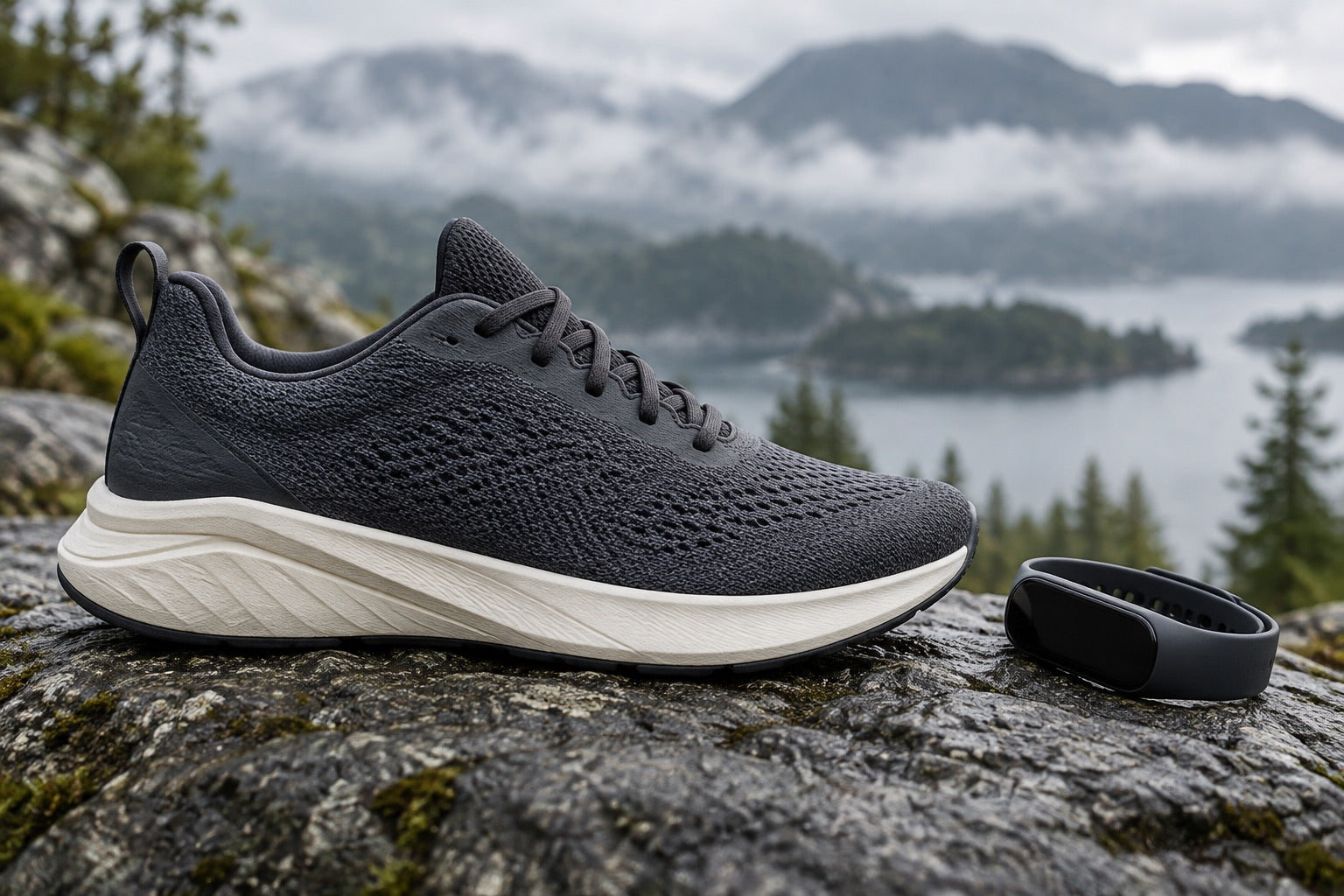
Walk into any golf shop in 2026 and the wall is unmistakable. Spiked golf shoes — the stiff, replaceable-cleat models that defined the category for four decades — now occupy a single end-cap. The rest of the wall is dominated by spikeless models: low-profile sneaker silhouettes with molded rubber outsole nubs, breathable knit uppers, and the look of a shoe you could just as easily wear to brunch. Industry tracking now pegs the spikeless category at roughly 65–70% of consumer golf shoe sales, with the share continuing to climb among golfers under 50.
That shift has been a commercial triumph for footwear brands and a quiet biomechanical problem for the feet wearing them. The post-round heel pain pattern that podiatry and sports medicine clinics see in recreational golfers has tracked closely with the spikeless adoption curve. The spikeless shoes that look like sneakers are, in fact, built like sneakers — and they're being asked to do a job that walked, rotation-loaded golf demands of a much more structured shoe.
If you've made the switch from spiked to spikeless in the last few years and noticed your feet aren't keeping up the way they used to, you're in good company. Here's what changed, what the research says about the gear, and what to do if you want to keep the spikeless aesthetic without paying for it with morning heel pain.
How the Golf Shoe Quietly Became a Sneaker
The modern spikeless golf shoe traces its commercial breakthrough to roughly 2010, when major footwear brands began applying their running and lifestyle design language to the golf category. Soft spikes had already replaced metal spikes in the late 1990s for turf-friendliness reasons; the next move was to remove the replaceable cleat system entirely and integrate traction directly into a molded rubber outsole. The result was a shoe you could wear from the parking lot to the clubhouse to the 19th hole without changing footwear — a real lifestyle benefit, and a category disruption.
What also got removed in that redesign, often quietly, was structure. Traditional spiked golf shoes carry features that recreational players rarely notice when those features are working: a saddle-style midfoot reinforcement to control rotational shear, a stiff TPU midsole shank that resists collapse during the loading phase of the swing, a deep heel counter that cradles the calcaneus, and a removable footbed that sits inside a structured chassis. Spikeless shoes, particularly the more athleisure-styled ones, frequently swap the rigid TPU shank for a foam midsole identical in stiffness to a casual walking shoe, replace the deep heel counter with a low collar for "comfort," and use a 3–5mm flat foam footbed that contributes essentially nothing to arch support.
For a golfer using the shoe the way the marketing suggests — a few cart-assisted rounds, a short walk to dinner — the loss of structure is invisible. For a golfer walking 18 holes on uneven turf while generating peak rotational ground reaction forces through the medial column of the foot, that loss is the problem.
The Two Loads a Golf Shoe Has to Manage
Golf layers two biomechanically distinct loads onto the foot in the same round. The first is ambulatory: walking 18 holes generates a mean step count of roughly 17,000 steps per round, with a working range of 4 to 7 miles depending on course length and terrain. The physiological demands of walking a round versus riding a cart[1] are not trivial. Much of that walking happens on uneven turf, soft fairways, or sloped rough — surfaces that demand continuous micro-adjustments from the intrinsic foot muscles and impose higher cumulative load on the plantar fascia than the same step count on a flat sidewalk.
The second load is rotational. A 2023 systematic review and meta-analysis in Applied Sciences confirmed that the lead foot generates substantially higher vertical and horizontal ground reaction forces[2] than the trail foot during the golf swing, with peak loads occurring just before ball impact and shear forces remaining elevated through follow-through. The rotational torque transfers to the ground through the medial column of the foot — the same anatomical region that houses the plantar fascia.
Over an 18-hole round those two loads stack. By the back nine the plantar fascia is dealing with the cumulative tensile strain of 10,000+ walking steps plus the rotational torque of 50+ full swings — a foot that walks off the 18th green hyperloaded, ready to stiffen overnight, and ready to deliver the textbook morning heel stab when the first weight-bearing step out of bed reloads cold tissue. A structured spiked shoe was historically built to absorb and redistribute both of those loads. A flat-footbed spikeless sneaker is built to absorb neither.
What the Biomechanics Actually Show
The literature on golf footwear is thinner than on running shoes, but the mechanism isn't in question. When the lead foot loads during the downswing, the medial longitudinal arch wants to collapse under the combined vertical load and the internal rotational moment generated by the hips and torso. A stiff midsole shank and a contoured arch support resist that collapse and keep the arch near-neutral through impact. A flat foam footbed and a soft, sneaker-like midsole offer little resistance — the arch collapses further, the plantar fascia stretches closer to its peak strain, and rotational shear gets absorbed by the soft tissues of the foot instead of by the shoe's internal structure.
The plantar fascia experiences peak loads of 1.2 to 3.7 times bodyweight[3] during walking, with the upper end showing up in heavier walkers on uneven surfaces. A round of golf is, almost definitionally, a heavier walker on uneven surfaces. Stack the rotational shear of 50 swings on top and the fascia is operating near the top of its functional load envelope for hours. The shoe is supposed to be one of the variables pulling peak load down. A flat-bedded spikeless shoe does the opposite.
The Clinical Pattern in the Spikeless Era
Plantar fasciitis is the single most common cause of heel pain in adults, accounting for an estimated 1 million outpatient visits annually[4] in the United States, and the condition affects roughly 10% of the population at some point in their lives. The hallmark presentation — sharp inner-heel pain worst with the first steps out of bed, easing with movement, returning after sustained activity — is so consistent that the diagnosis is usually made on history alone.
The spikeless-era pattern looks like this: a recreational player in their 40s or 50s who has played the same number of rounds for a decade walks into a sports medicine clinic with new, four-to-eight-week-old plantar heel pain. They've recently — within the last two seasons — switched to spikeless models. Their step counts, course choices, and round frequency haven't materially changed. The only new variable is the footwear.
The 2003 Riddle case-control study identifying independent risk factors[5] — still the gold-standard epidemiology on plantar fasciitis — identified three: BMI over 27, prolonged weight-bearing, and reduced ankle dorsiflexion. Footwear isn't on the list because the study population was occupational. But subsequent work has consistently identified inadequate arch support and under-structured footwear as accelerants in active populations. A spikeless shoe with a flat 3mm footbed isn't causing plantar fasciitis in a vacuum — but in a population whose walked-round step volume is already a major weekly load, it's removing a layer of protection the spiked shoe provided quietly in the background.
The Three Specific Design Problems
Not all spikeless models are biomechanically identical. The category spans athletic models that retain meaningful midsole structure all the way to true sneaker-styled offerings functionally indistinguishable from a casual walking shoe with grippy outsole nubs. Three design problems show up disproportionately in the models that drive post-round heel pain.
The flat foam footbed. Most stock footbeds in spikeless models are 3–5mm of die-cut foam with no anatomical contouring. They exist to make the shoe feel finished out of the box, not to manage load. Under a walked round's cumulative strain, they compress within the first 90 minutes of use and provide essentially zero arch support for the back nine.
The eroded heel counter. Traditional golf shoes carry a deep, semi-rigid heel counter — the cup-shaped structure at the back of the shoe that cradles the calcaneus. Many spikeless models reduce or soften the heel counter to make the shoe feel more like a sneaker around the ankle. The cost is reduced calcaneal stability during swing loading, which lets the heel pad migrate laterally and undermines the shoe's ability to keep the rearfoot neutral.
The soft, low-shank midsole. The midsole shank — the stiff plate that runs through the midfoot between heel and forefoot — is what resists midsole collapse during the rotational load of the swing. Athletic spikeless models often retain a TPU shank or equivalent. Lifestyle-styled spikeless models frequently replace it with foam or eliminate it entirely. The shoe twists noticeably under swing torque, and the plantar fascia absorbs the energy the shank used to deflect.
Why "Just Go Back to Spikes" Isn't the Answer
The intuitive fix is to abandon spikeless and return to a structured spiked model. For some players that's the right call — particularly tournament-frequent walkers carrying their own bag on hilly courses. But the spikeless category isn't going away, and the comfort and aesthetic gains are real. Most golfers don't want to give up a category that works for them 80% of the time because of a foot pain pattern that's solvable without a wholesale gear change.
The higher-leverage move is to retrofit the spikeless shoes you already own with a structured insert. A properly contoured aftermarket insert restores the three things the stock footbed and the eroded midsole architecture took away: a deep heel cup that re-stabilizes the rearfoot, a contoured medial arch support that resists arch collapse under the rotational swing load, and a forefoot pad that redistributes pressure away from the metatarsal heads where most golfers feel late-round forefoot burn. If you want a deeper primer on the engineering tradeoffs, our guide to how inserts differ from cushioned footbeds walks through what actually redistributes load.
Our orthotic inserts for plantar fasciitis drop into virtually every spikeless golf shoe on the market without affecting fit or feel. The semi-rigid arch shell adds the structural support the foam footbed doesn't provide; the deep heel cup re-creates the calcaneal cradling the eroded heel counter lost. The swap takes two minutes and is the single highest-leverage change available to address post-round heel pain without buying a different shoe.
The Evidence Base for Inserts in Plantar Heel Pain
The case for adding a contoured insert isn't anecdotal. A 2022 systematic review and meta-analysis in The Foot concluded that prefabricated foot orthoses produced clinically meaningful reductions in plantar heel pain[6] compared with sham or no intervention, with effect sizes broadly comparable to custom devices at a fraction of the cost. The American Physical Therapy Association's JOSPT clinical practice guidelines on heel pain[7] — the document that anchors first-line care for the condition — list foot orthoses among the highest-evidence first-line interventions, alongside calf and plantar fascia stretching, manual therapy, and patient education.
In a golf-shoe context the mechanism is straightforward. An insert with a deep heel cup and contoured medial arch reduces strain rate and peak strain on the plantar fascia by supporting the medial longitudinal arch and redistributing pressure away from the fascia's origin at the medial calcaneal tubercle. In the swing, that arch support resists the rotational collapse that loads the fascia during the downswing and follow-through. In the walking portion of the round, the heel cup and arch contour reduce peak plantar pressures step over step. The two benefits compound across 18 holes into meaningfully lower cumulative load on the fascia.
What to Check if You're Shoe Shopping Anyway
If you're in the market for new spikeless shoes and want to minimize the structural compromise, three checks at the shop will tell you most of what you need to know.
Twist the shoe. Grip the heel in one hand and the forefoot in the other and try to wring it like a wet towel. A shoe that twists easily has a soft or absent midsole shank. A shoe that resists twisting will deflect rotational energy that would otherwise hit the fascia.
Press into the heel counter from behind. A counter that collapses under thumb pressure won't stabilize the calcaneus during swing loading. A counter that resists pressure and snaps back will.
Pull out the stock footbed. A flat slab of die-cut foam will compress within a few rounds and never recover. A footbed with visible arch contour and a heel cup is doing some work — though even contoured stock footbeds are usually outperformed by an aftermarket insert designed for plantar fascia load management.
The Round After Next Doesn't Have to Hurt
The spikeless category isn't going away, and for most recreational golfers it shouldn't. The comfort and the parking-lot-to-clubhouse versatility are real benefits. But the category was designed assuming the average user is a cart-riding, occasional player. For the walked-round golfer logging 17,000 steps and 50 full swings of rotational torque, most spikeless models are structurally underbuilt for the job.
The fix isn't to abandon the category. It's to recognize that the modern spikeless shoe is a chassis that expects the user to upgrade what's underfoot. Swap the stock footbed for a contoured insert and you recover the heel cup, arch support, and pressure redistribution walked rounds and swing loads demand. The morning heel stab fades, the back-nine arch fatigue gets pushed to hole 17 or 18, and the spikeless shoes you want to wear become shoes your feet can tolerate for another 50 rounds.
The WYATT takeaway
You traded a structured spiked shoe for a sneaker-styled spikeless model with a flat 3–5mm foam footbed, a softened heel counter, and little or no midsole shank — then asked it to carry 17,000 walking steps and 50+ rotation-loaded swings per round.
With nothing resisting it, the medial longitudinal arch collapses further under each swing's vertical and rotational load. The plantar fascia stretches closer to peak strain and absorbs shear the shoe used to deflect — round after round, until cold tissue delivers the textbook morning heel stab.
The FCSS™ Pro drops into the spikeless shoes you already own in two minutes — a semi-rigid arch shell and deep heel cup that re-add the structure the stock footbed removed, redistributing load off the fascia so you keep the spikeless aesthetic without the post-round heel pain.
References
- Riding a Golf Cart Versus Walking: Physiological and Performance Differences in Tournament Golf. Journal of Functional Morphology and Kinesiology, 2024. ncbi.nlm.nih.gov
- The Relationship between Ground Reaction Forces, Foot Positions and Type of Clubs Used in Golf: A Systematic Review and Meta-Analysis. Applied Sciences, 2023. mdpi.com
- The pathomechanics of plantar fasciitis. Sports Medicine, 2006. pubmed.ncbi.nlm.nih.gov
- Plantar Fasciitis. American Family Physician, 2019. aafp.org
- Risk factors for Plantar Fasciitis: a matched case-control study. Journal of Bone and Joint Surgery, 2003. pubmed.ncbi.nlm.nih.gov
- Foot orthoses for plantar heel pain: a systematic review and meta-analysis. The Foot, 2022. pubmed.ncbi.nlm.nih.gov
- Heel pain — plantar fasciitis: clinical practice guidelines. JOSPT, 2014. jospt.org