
GLP-1 Weight Loss and Foot Pain: Why Shedding Pounds Doesn't Automatically Fix the Heel
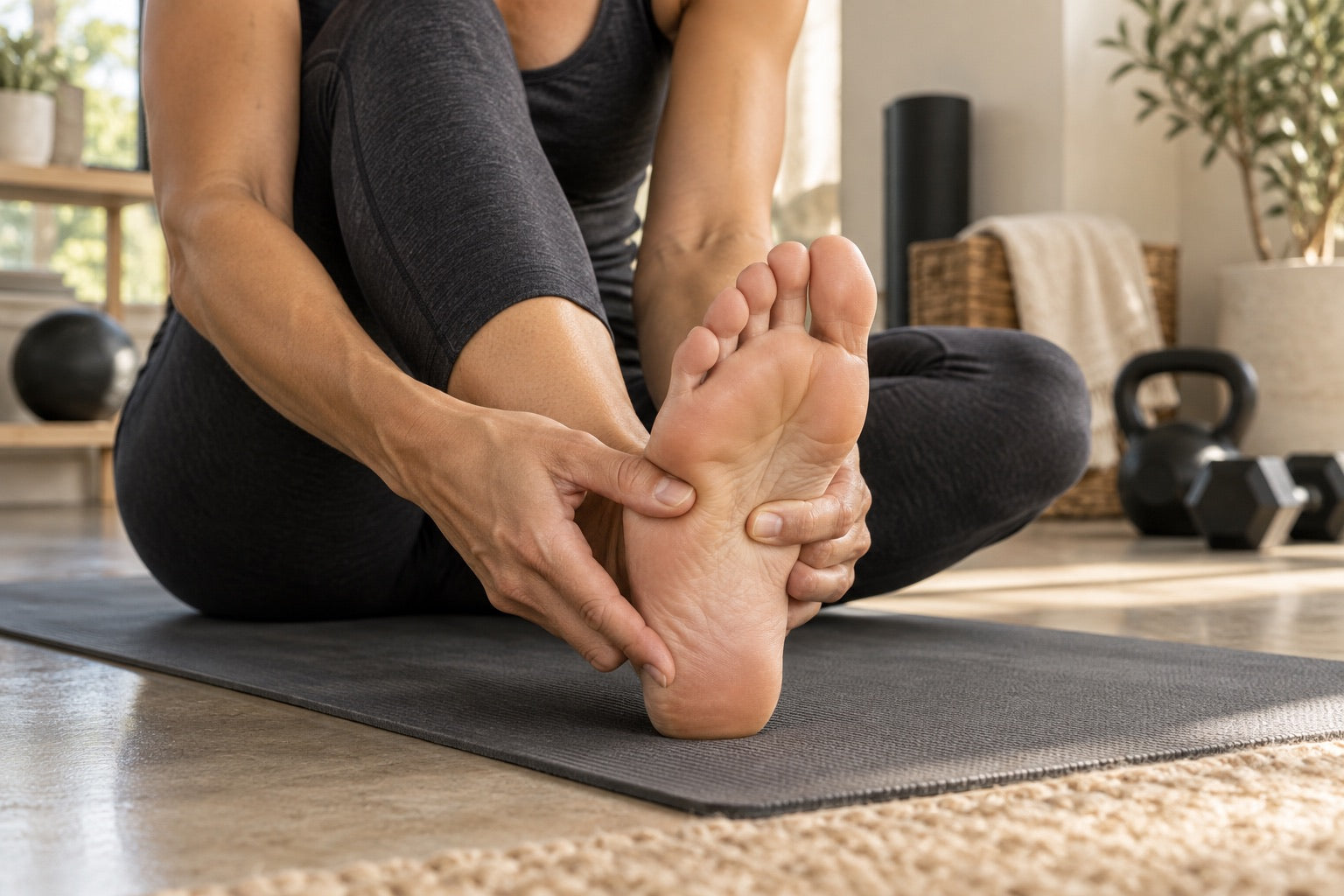
If you started a GLP-1 medication in the last twelve months and quietly assumed your foot pain would melt away with the rest of you, you are far from alone — and most likely a little frustrated. Pounds have come off. Belts have moved several holes. Stairs feel different. But that hot, tearing first-step pain when you swing your legs out of bed? It is still there. Sometimes worse than before.
That gap between the body in the mirror and the feet on the floor has become one of the most common conversations in podiatry waiting rooms in 2026. With more than 12% of US adults reporting they have used a GLP-1 medication — semaglutide (Ozempic, Wegovy), tirzepatide (Mounjaro, Zepbound), or a newer entrant — and obesity being the single strongest non-anatomic risk factor for plantar fasciitis, the math seemed obvious: lose the weight, lose the heel pain. It has not played out that way for everyone.
Here is the honest, biomechanical reason why — and what you can do about it without giving up the progress you have worked for.
The Weight-Plantar Fasciitis Link Is Real
First, the assumption is not wrong. The link between body weight and plantar fasciitis is one of the most consistent findings in the orthopedic literature. A frequently cited systematic review and meta-analysis published in the British Journal of Sports Medicine found that a BMI greater than 27 carried an odds ratio of 3.7 for plantar fasciopathy[1] — meaning patients above that threshold were nearly four times more likely to develop the condition than those below it. The effect was strongest in non-athletic adults, where the load is largely static rather than dynamic.
A 2023 case-control study reinforced the pattern: obesity (BMI > 30) carried an odds ratio of 2.675 for plantar fasciitis[2] in patients with heel spurs, second only to the size of the spur itself. The relationship between heel spurs and the surrounding fascia is its own subject — we break it down in our guide to plantar fasciitis versus heel spurs — but the weight signal is unmistakable in both.
And the inverse holds — at least with surgical weight loss. A landmark study in the Journal of Bone and Joint Surgery followed 162 obese patients with documented plantar fasciitis through bariatric surgery and showed that 146 of them (90%) reached symptom resolution[3] as their BMI dropped, with a corresponding decrease in foot-related healthcare visits.
So weight loss helps. The question is not whether — it is why pharmaceutical weight loss does not always help as fast or as completely as the literature predicts.
Three Reasons GLP-1 Weight Loss Does Not Automatically Fix the Heel
The fascia under your foot is not a passive cushion that simply gets squeezed less when you weigh less. It is a load-adapted structure that has spent months or years being remodeled by the body it lives under. When the load comes off quickly — and GLP-1 weight loss is often quick, at 12–18% of body weight in the first year — the structural picture lags well behind the scale. There are three mechanisms responsible for that lag.
1. The Fascia Itself Has Been Remodeled
Plantar fasciitis is misnamed. The "-itis" suffix suggests acute inflammation, but biopsies of chronic cases consistently show fasciosis: degenerative thickening, collagen disorganization, micro-tears, and neovascularization with no significant inflammatory cell presence. This is the picture of a tissue that has been overloaded for a long time and adapted poorly, not a tissue that is simply irritated.
That kind of structural change does not reverse just because the load eases. The fascia is thicker than it should be — frequently >4 mm on ultrasound versus a healthy 2–3 mm — and that thickening represents real remodeled tissue. Lose 40 pounds in nine months on tirzepatide and the fascia is, on day 270, still the same thickened band it was on day one. It is now being asked to absorb less force per step, which is genuinely beneficial, but it still hurts when you load it cold in the morning because its structure has not yet remodeled back toward normal. Tissue remodeling timelines for plantar fascia are measured in 6–18 months under appropriate load, not in weeks.
Add the secondary players — calcaneal (heel) spurs that the body laid down as a defense, plantar fat-pad thinning that simply does not regenerate the way fascia does, and any compensatory gait habits the foot has settled into — and you have a structural picture that is almost guaranteed to outlive the weight that created it.
2. GLP-1 Medications Take Muscle With the Fat — Including in the Foot
This is the part that almost nobody talks about, and it is arguably the most important biomechanical wrinkle in the GLP-1 era.
Pharmaceutical weight loss is not body-composition neutral. The same 2025 reporting and trial data that has put GLP-1s in every newspaper in America has also been clear about a downside: a meaningful portion of the weight lost is lean mass, not fat. In a frequently cited semaglutide 2.4 mg analysis, patients lost 15.7% of body weight but also experienced a 7.4% reduction in total lean body mass — meaning roughly 40% of weight lost on semaglutide alone comes from lean tissue[4], including muscle. This lean-mass cost has been tracked in the cardiovascular literature as well, where body-composition changes during semaglutide treatment were reported alongside cardiometabolic outcomes[5].
The SEMALEAN study confirmed the same pattern with finer granularity: a 3 kg loss of lean mass in the first seven months that then stabilized[6], with the prevalence of sarcopenic obesity dropping from 49% to 33% by month twelve. Encouraging for cardiometabolic health — and unambiguous about the trade-off.
Now look at the foot. The arch is held up by an active stabilizer system — the intrinsic foot muscles (abductor hallucis, flexor digitorum brevis, quadratus plantae, the lumbricals and interossei) plus the long extrinsic stabilizers (tibialis posterior, peroneus longus, flexor hallucis longus). These are skeletal muscles. They are subject to the same systemic catabolic pressure as the quad and the glute and the deltoid.
When a GLP-1 patient is in a 500–800 kcal daily deficit for months, with appetite suppressed, often eating well under 60 g of protein per day, and not strength training — which describes the typical user — those small foot muscles atrophy along with everything else. The arch loses some of its active support at the same moment the fascia is being asked to do less. The body weight has dropped, yes. But the share of arch support coming from passive structures (fascia, ligaments) versus active structures (intrinsics) has shifted in the wrong direction.
That is why a subset of GLP-1 patients — particularly women and adults over 55, who are at higher baseline risk for sarcopenia — report that their foot pain has not improved or has subtly worsened despite losing 30 to 60 pounds. The fascia is being protected by less muscle than it was before.
3. Activity Rebound Exposes Deconditioned Feet
The third mechanism is almost ironic. As patients feel lighter and more mobile — and they do, that part of the GLP-1 experience is real — they walk more. They take the trip they postponed. They join the pickleball league. They go back to the gym for the first time in three years. They are doing exactly what their cardiologist, endocrinologist, and primary care doctor have been begging them to do for a decade.
And their feet, which were sedentary under a heavier body, are suddenly being asked to do five, six, seven thousand more steps a day than they had been. On harder surfaces. In shoes that no longer fit the same — feet do narrow with significant weight loss, sometimes by half a width, which changes how the foot is held inside the shoe. With less intrinsic muscle holding the arch up than before, on a fascia that has not yet finished remodeling.
This is the classic recipe for symptom flare, not symptom resolution. A 40-pound lighter patient walking 8,000 steps a day on a deconditioned foot can absolutely be loading their plantar fascia harder than the same patient was when they walked 2,500 steps a day at their starting weight.
What Actually Helps
None of this is an argument against GLP-1 medications. The cardiometabolic case for these drugs is overwhelming, and the long-term outlook for the foot — once the fascia has remodeled, the intrinsics have been rebuilt, and the new gait has settled — is genuinely better than the alternative. The problem is the transition window, which can run twelve to eighteen months. Three things tend to compress that window.
Protect protein intake aggressively. The Endocrine Society's 2025 annual meeting featured data showing that GLP-1 patients who hit roughly 1.2 g/kg/day of protein preserved significantly more lean mass[7] than those eating typical Western-deficit levels. Lean mass preservation is not just about the gym — it is about the foot intrinsics that hold your arch up between footfalls. Aim for a protein target tied to your goal body weight, spread it across meals, and treat it as non-negotiable rather than aspirational.
Add resistance training, including foot-specific work. Two to three short sessions per week of compound resistance training is the most well-established intervention against GLP-1 muscle loss. For the feet specifically, the short-foot exercise, towel scrunches, single-leg balance progressions, and barefoot calf raises performed slowly are the lowest-friction options. Five to ten minutes a day adds up. Progress them the way you would any other lift — a little more time under tension, a little more range, a little more balance challenge each week — so the intrinsic muscles actually rebuild rather than simply maintain.
Manage the structural load while the fascia remodels. This is where external support matters most — not as a permanent crutch, but as a bridge across the months when the fascia, the intrinsics, and the new gait pattern are all simultaneously catching up to the lighter body. Structured arch support reduces peak tensile load on the plantar fascia during heel strike and midstance, which is the mechanical input the tissue actually needs to remodel toward normal. A properly engineered insert designed for plantar fasciitis sits inside whatever shoes you are already walking more in — and they probably will not fit the same way they did three months ago, so the insert matters more, not less.
The clinical guidelines have not changed because the GLP-1 era arrived. The 2024 American College of Foot and Ankle Surgeons consensus and recent plantar fasciitis meta-analyses both still place structured inserts and calf-chain stretching as the anchor of first-line care. What has changed is the audience: more people are in active recovery from chronic foot pain at the same time their bodies are undergoing the most rapid composition shift of their adult lives. That combination needs more intentional support, not less.
A Realistic Timeline
If you are on a GLP-1, are losing meaningful weight, and your heel pain is not yet following the trajectory you expected, the timeline that matches the biology — and the trial data — looks something like this:
For the first three to six months, expect the fascia to behave roughly the way it did at your previous weight. You are loading it less per step, but it has not had time to remodel. Symptoms may improve modestly. They may not improve at all. Neither outcome means the medication is failing your feet, and neither is a reason to abandon it.
From six to twelve months, given protein-sufficient eating, resistance training that includes the lower leg and foot, and load-reducing support inside your shoes, the fascia begins to remodel toward a thinner, more normal structure. Most patients see meaningful symptom improvement in this window — but only if they have not simultaneously increased their step count past what their deconditioned feet can absorb. This is the stretch where a gradual, deliberate ramp in activity pays the largest dividend.
From twelve to eighteen months, the fascia, the intrinsics, the new gait, and the lighter body finally arrive in the same place. This is where the 90% resolution rates in the bariatric literature come from. It is reachable from GLP-1 weight loss too — it just does not arrive on the same timeline as the weight.
The patients who do best in this window are the ones who treat their feet as a separate project from the medication. The drug works on appetite and metabolism. The fascia, the foot muscles, and the gait have their own schedule. Respecting both schedules is what gets you to the lighter, lower-pain version of yourself without losing months to a flare you did not need to have. If your pain has been lingering for months regardless of the scale, our breakdown of why most inserts fail and what actually works for plantar fasciitis is a useful next read.
This article is for educational purposes and does not replace evaluation by a podiatrist, primary care physician, or the prescriber managing your GLP-1 therapy. If your foot pain is new, worsening, or accompanied by swelling, numbness, or color changes, consult a clinician.
Frequently Asked Questions
Will my plantar fasciitis go away on its own once I lose the weight on a GLP-1?
Sometimes, but rarely on the timeline people expect. Body weight drops far faster than the plantar fascia can structurally remodel. The fascia that thickened over months or years of overload stays thickened for roughly 6 to 18 months even after the load eases, so heel pain commonly lags the scale by a year or more. Weight loss removes a major driver of the problem, but the remodeled tissue still needs time and appropriate load management to normalize.
Can GLP-1 medications actually make foot pain worse?
For a subset of patients, yes — not directly, but through two side effects. First, a meaningful share of GLP-1 weight loss comes from lean mass, including the small intrinsic muscles that support the arch, so the fascia is protected by less active muscle than before. Second, feeling lighter prompts many people to suddenly walk thousands more steps a day on deconditioned feet. Together those can flare symptoms even as the number on the scale falls.
What should I do for my feet while losing weight on a GLP-1?
Three things shorten the rough transition window: hit a protein target near 1.2 g/kg/day to preserve muscle, add two to three short resistance sessions a week including foot-specific work like short-foot holds and slow calf raises, and use structured arch support to reduce peak load on the fascia while it remodels. Increase your step count gradually rather than all at once, and re-check your shoe fit, since feet often narrow with significant weight loss.
The WYATT takeaway
You are losing weight fast on a GLP-1, but the scale is moving faster than your feet can adapt. Your step count is climbing on shoes that no longer fit the same, while the heel pain you expected to disappear is still there every morning.
The plantar fascia stays thickened and remodeled for 6 to 18 months after the load eases, while lean-mass loss thins the intrinsic muscles that hold your arch up. The fascia is now protected by less active muscle, on a foot doing thousands more steps a day.
The FCSS™ Pro is a removable modification that slips into the shoes you are already walking more in. It reduces peak tensile load on the fascia during heel strike and midstance — bridging the transition window so the tissue can remodel while you stay active, then comes out when you no longer need it.
References
- van Leeuwen KDB, et al. Higher body mass index is associated with plantar fasciopathy/'plantar fasciitis': systematic review and meta-analysis. British Journal of Sports Medicine, 2016. pubmed.ncbi.nlm.nih.gov
- Association of obesity and plantar fasciitis in patients with calcaneal heel spurs (case-control study). PubMed Central, 2023. pmc.ncbi.nlm.nih.gov
- Boules M, et al. Effect of surgical weight loss on plantar fasciitis and health-care use in obese patients. J Am Podiatr Med Assoc / J Bone Joint Surg, 2018. pubmed.ncbi.nlm.nih.gov
- Muscle matters: the challenge of preserving lean mass during obesity treatment. Healio Endocrinology, 2025. healio.com
- Body-composition changes and cardiometabolic outcomes during semaglutide treatment. Circulation, 2024. ahajournals.org
- SEMALEAN: lean-mass changes and sarcopenic obesity prevalence during semaglutide treatment. PubMed Central, 2025. pmc.ncbi.nlm.nih.gov
- Higher protein intake helps preserve lean mass during GLP-1 therapy (ENDO 2025 press release). Endocrine Society, 2025. endocrine.org